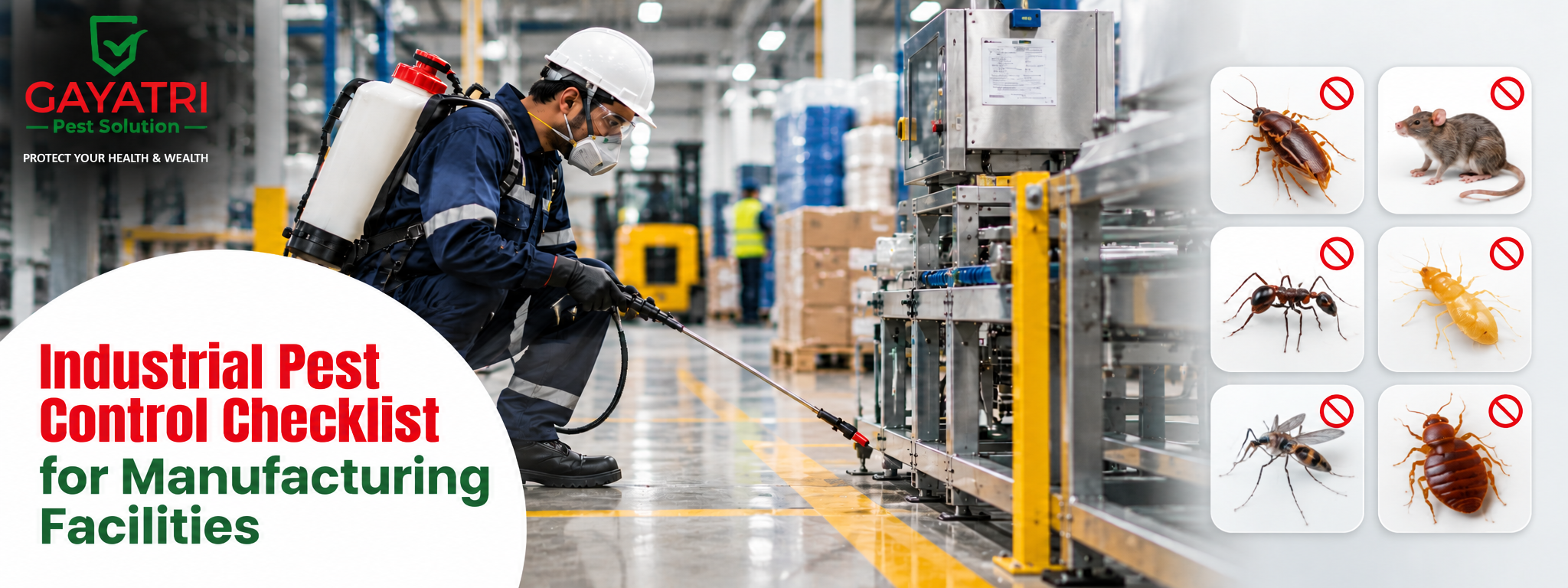
Industrial Pest Control Checklist for Manufacturing Facilities
A single rat in a raw material store can wreck a batch. A cloud of flies near a drain can sink an audit. Pests rarely cause a scene, which is the trouble. They get in through gaps you’d never notice, contaminate stock, chew cables, and slow production while everyone assumes things are fine. Rodents, cockroaches, flies, and stored-product insects all multiply fast once they settle. A reliable Pest Control service in Ahmedabad helps you stay ahead of them, and a regular inspection routine lets you catch trouble while it’s still small.
Why Is Pest Control Important in Manufacturing Facilities?
A factory usually keeps raw materials, packaging, finished goods, and waste under one roof. Add a little moisture, some stray food particles, and one unsealed gap, and you’ve set out a welcome mat.
The fallout is easy to list. Products and packaging get contaminated. Wiring, machinery, and stock get damaged. Production stalls, and that costs money. Auditors notice hygiene lapses, and customers who find something they shouldn’t tend to remember it. A planned programme deals with these risks before they reach the shop floor.
Industrial Pest Control Checklist: 7 Areas to Inspect
Walk the site with these eight areas in mind. How often you do it depends on your facility’s risk level, pest history, and industry requirements.
1. Inspect Entry Points and Building Exteriors
Start outside. Pests use loading bays, doors left open, torn screens, and gaps around pipes. Seal cracks where walls, doors, and utility lines meet, and fit door sweeps and insect screens. Keep the loading bay shut when nothing is being moved. Clear standing water, weeds, and clutter from around the building, and look along the outer walls for rodent burrows.
2. Check Raw Material and Storage Areas
Stock that sits for weeks or arrives in damaged packaging attracts both rodents and insects. Check deliveries for droppings, live insects, and torn packs before they go in. Store goods off the floor in clean, dry, dedicated areas, rotate them first in, first out, and remove anything damaged or infested according to your site procedure. Catch it here, and it stays a small problem.
3. Maintain Clean Production Zones
Machines collect dust, residue, and scraps, and pests love all three. Decide on a cleaning schedule for the equipment and the floors around it, then stick to it. Spills shouldn’t wait until the end of the shift. The spots that get missed are underneath and behind the machinery, so get down and check them properly. Keep the drains clean, and fix a leak the day you find it, not next week. One caution: follow your equipment safety rules, and don’t let water or chemicals anywhere near sensitive machinery.
4. Manage Waste and Disposal Areas
Waste is food and shelter in one. Use covered bins that wash easily, empty them often, and keep the waste area well away from production and storage. Watch for flies, rodents, and bad smells, because they usually appear there first.
5. Monitor Common Industrial Pests
Each pest leaves different clues, and each needs different handling.
| Pest | What to look for | What helps |
|---|---|---|
| Rodents | Droppings, gnaw marks, chewed packaging | Seal the gaps they use and keep track of where they’re active |
| Cockroaches | Egg cases, droppings, the odd one scuttling off when you switch on a light | Fix damp spots and tighten up cleaning |
| Flies | Swarms hanging around bins or drains | Keep waste under control and get rid of whatever they breed in |
| Stored-product insects | Webbing, larvae, stock that’s gone off | Check deliveries when they arrive and keep affected goods apart from the rest |
| Ants | Trails leading to food, water or a gap in the wall | Clear away what’s drawing them in and block the way they get inside |
6. Review Pest Monitoring Devices
Traps and monitoring stations tell you where the pests are. Check them on schedule, log counts, locations, and dates, and keep every device within reach. Replace broken ones. And if one keeps catching something, ask why, instead of just swapping the trap. Position them so they never touch products or get in production’s way.
7. Train Employees to Report Pest Activity
Your staff often spot the first signs, long before a scheduled inspection does. Show them what pest evidence looks like, give them an easy way to report a sighting, explain the rules on waste and food storage, and decide who fixes hygiene problems. Bring up repeat incidents in your operations meetings. A quick report means a quick response.
When Should You Hire an Industrial Pest Control Professional?
Call in a professional when pests keep returning despite cleaning, when rodents reach storage areas, when products show signs of infestation, or when your monitoring records show activity creeping up.
If you need a Pest Control service in Ahmedabad, call Gayatri Pest Solution on 76003 26341 to discuss your facility. Before treatment starts, talk through the pests involved, the affected areas, safety precautions, and the inspection and monitoring plan.